The neutrality of the Internet is not negotiable! It is not a question of preventing illegal activities, but of restricting freedom of speech.
Once you complete your Box24 casino login, you can access a diverse library of titles featuring various themes and gameplay mechanics.
Pour profiter d'une ludothèque variée et de conditions de jeu transparentes, effectuez votre Betify casino connexion afin d'accéder rapidement à vos divertissements favoris.
The A Big Candy app stands out by offering Australian players rapid payouts and seamless access to a wide variety of online pokies.
A network, censored and controlled by authorities and companies, is only used to feed the capitalism machine and give small companies and individuals access to the market only through more and more money!
***
Die Neutralität des Internets ist nicht verhandelbar! Es geht nicht darum, illegale Aktivitäten zu verhindern, sondern die Meinungsfreiheit einzuschränken.
Ein Netzwerk, das von Behörden und Unternehmen zensiert und kontrolliert wird, dient nur dazu, die Kapitalismusmaschine zu ernähren und kleinen Unternehmen und Einzelpersonen den Zugang zum Markt nur durch immer mehr Geld zu ermöglichen!
***
La neutralité d’Internet n’est pas négociable! Il ne s’agit pas d’empêcher les activités illégales, mais de restreindre la liberté d’expression.
Un réseau, censuré et contrôlé par les autorités et les entreprises, n’est utilisé que pour nourrir la machine du capitalisme et donner aux petites entreprises et aux particuliers un accès au marché uniquement avec de plus en plus d’argent!
***
¡La neutralidad de Internet no es negociable! No se trata de prevenir actividades ilegales, sino de restringir la libertad de expresión.
¡Una red, censurada y controlada por autoridades y empresas, solo se utiliza para alimentar la máquina del capitalismo y dar a las pequeñas empresas e individuos acceso al mercado solo a través de más y más dinero!
***
La neutralità di Internet non è negoziabile! Non si tratta di prevenire attività illegali, ma di limitare la libertà di parola.
Una rete, censurata e controllata da autorità e società, viene utilizzata solo per alimentare la macchina del capitalismo e dare alle piccole imprese e ai singoli l’accesso al mercato solo attraverso sempre più denaro!
Нейтралитет Интернета не подлежит обсуждению! Речь идет не о предотвращении незаконной деятельности, а об ограничении свободы слова.
Сеть, подвергаемая цензуре и контролируемая властями и компаниями, используется только для того, чтобы питать машину капитализма и предоставлять небольшим компаниям и частным лицам доступ к рынку только через все больше и больше денег!
***
Az internet semlegessége nem tárgyalható! Nem az illegális tevékenységek megelőzéséről, hanem a szólásszabadság korlátozásáról van szó.
A hatóságok és a társaságok cenzúrázott és ellenőrzött hálózatát csak a kapitalizmus gépe táplálására használják, és csak egyre több pénzzel biztosítják a kisvállalkozások és magánszemélyek számára a piacra jutást!
***
حياد الإنترنت غير قابل للتفاوض! إن الأمر لا يتعلق بمنع الأنشطة غير القانونية ، وإنما بتقييد حرية التعبير.
لا يتم استخدام شبكة ، تخضع للرقابة والتحكم من قبل السلطات والشركات ، إلا لإطعام آلة الرأسمالية ومنح الشركات الصغيرة والأفراد الوصول إلى السوق فقط من خلال المزيد والمزيد من الأموال!
***
Η ουδετερότητα του Διαδικτύου δεν είναι διαπραγματεύσιμη! Δεν πρόκειται για την πρόληψη παράνομων δραστηριοτήτων, αλλά για τον περιορισμό της ελευθερίας του λόγου.
Ένα δίκτυο, λογοκριμένο και ελεγχόμενο από τις αρχές και τις εταιρείες, χρησιμοποιείται μόνο για να τροφοδοτεί την μηχανή του καπιταλισμού και να δίνει στις μικρές επιχειρήσεις και τα άτομα πρόσβαση στην αγορά μόνο με όλο και περισσότερα χρήματα!
***
İnternetin tarafsızlığı pazarlığa açık değil! Bu yasadışı faaliyetleri önleme değil, konuşma özgürlüğünü kısıtlama meselesidir.
Yetkili makamlar ve şirketler tarafından sansürlenen ve kontrol edilen bir ağ, yalnızca kapitalizm makinesini beslemek ve küçük şirketlere ve bireylere yalnızca daha fazla parayla pazara erişim sağlamak için kullanılır!
***
Interneto neutralumas nėra apyvartinis! Tai nėra neteisėtos veiklos prevencijos klausimas, bet apriboto žodžio laisvė.
Tinklas, cenzūruotas ir kontroliuojamas valdžios, institucijų ir įmonių, yra naudojamas tik šerti kapitalizmo machanizmą, ir suteikti mažoms įmonėms ir asmenims būdą patekti į rinką tik per daugiau ir daugiau lėšų!
***
بیطرفیِ اینترنت قابل بحث نیست مسئله جلوگیری از فعالیت های قانونی نیست، بلکه محدود کردن آزادی بیان است.
یک شبکه سانسور شده و کنترل شده توسط مقامات رسمی و شرکتها، تنها به جهت تغذیه ماشین سرمایهداری و اعطای دسترسی بازار به شرکت های کوچک و اشخاص تنها از دریچه پولِ بیشتر و بیشتر است!
App / System: All general LLM Platform Architectures Chat Prompts
Component: User Interface & Inference Pipeline
Severity: High (Systemic Usability Failure)
Type: Architectural Flaw / Product Design Issue
1. Summary
Providing a single, universal text input (“Single Input Box”) without an explicit validation mode selection leads to critical malfunctions during deterministic tasks. When presented with queries involving physical causal consequences (e.g., repair guides, technical procedures), the system incorrectly treats the request as a fictitious or creative text draft. Instead of constraining the output to verified sources or aborting when data is missing, the system outputs hallucinated facts, invented organizations/URLs, and incorrect procedural instructions—all presented with high rhetorical plausibility.
2. Root Cause Analysis
Lack of Mode Separation: The user interface lacks a functional distinction between creative text generation (stochastic language computation) and deterministic fact validation (strict data verification path logic).
Prioritization of Rhetoric Over Factual Accuracy: Evaluation and filtering pipelines prioritize compliance with safety guidelines and linguistic fluency. Empirical verification of entities (e.g., real-world validation of links, product names, or physical mechanical forces) does not take place.
Contextual Blindness to Physical Risks: Safety filters primarily trigger on legal/extremist keywords (self-harm, weapons, illegal acts). Risk analysis for physical missteps in everyday tasks (e.g., disassembling components under mechanical tension) is absent in the classification layer.
Missing Hard-Stop in RAG Interfaces: Databases and search APIs are utilized merely as context extensions rather than deterministic validators. If information is missing from verified sources, the model falls back to probabilistic generation instead of aborting the response with a defined error code.
3. Steps to Reproduce
Open the standard user interface of the LLM assistant.
Enter an instructional procedural query requiring real-world physical causal accuracy or proper entity validation (e.g., requesting a specific repair procedure or referencing a niche platform).
Observe the generated output.
Expected Result:
The system recognizes the prompt as an instructional fact-retrieval task. It cross-checks the information against verified databases. If no validated data exists, the system refuses free generation, reports the absence of verified sources, and redirects to subject-matter experts or audited original media.
Actual Result:
The system generates fluent-sounding prose. It invents plausible steps, non-existent URLs, non-existent organizations, or physically/mathematically incorrect procedures. The response is presented with unearned authority and confidence.
4. Impact
Safety Risk: Potential risk of property damage or personal injury when executing incorrect physical procedures.
Loss of Efficiency: The overhead required to manually fact-check responses exceeds the time saved by text generation. The tool loses utility for professional and safety-critical use cases.
Reputational Damage: The disparity between marketing promises (“Intelligent Assistant”) and technical reality causes a loss of user trust.
5. Proposed Solution / Feature Request
A. Introduce explicit System Modes in the UI
Implement clearly separated operational modes prior to prompt submission:
Mode A: “Creative & Draft” (Unconstrained stochastic generation for brainstorming, rewrites, and fiction).
B. Implement a Deterministic Validation Layer (Grounded Mode)
Hard Stop Rule: If an entity, procedure, or link cannot be 100% verified against an audited source database, stochastic text generation must be strictly prohibited.
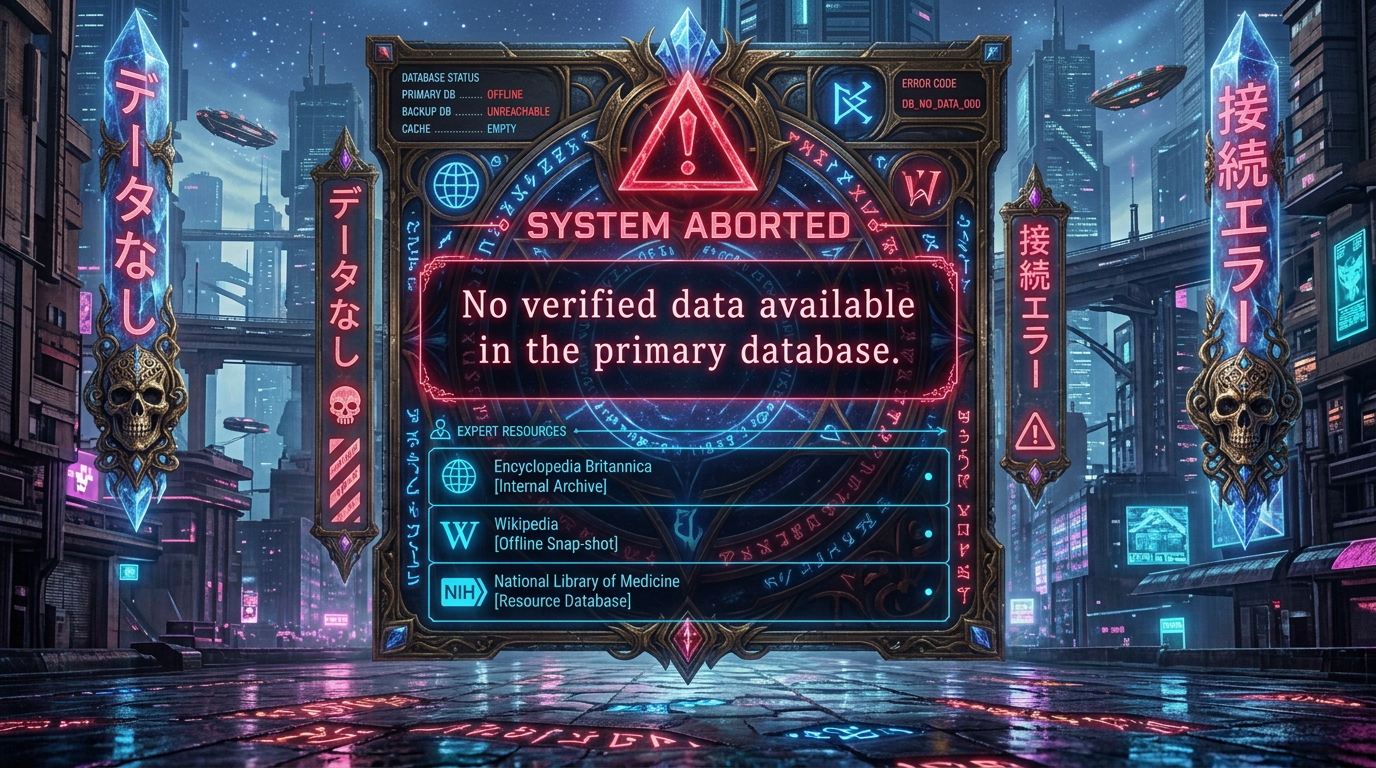
Output Constraint: The system must abort the response and return a standardized message: “No verified data available in the primary database,” accompanied by direct links to external expert resources.
C. Expand the Safety Classifier
Deploy a pre-processing classification module that automatically detects queries with physical real-world consequences (repairs, maintenance, chemistry, medicine) and routes them strictly into the verified validation mode.
Like morning mist over an imagined landscape, these words were spun from raw algorithms into a fleeting dream of grace.
Ausverkauf Made in Germany: Wenn die letzte Fabrik das Licht ausknipst.
short
Europas industrielle Souveränität zurückholen: Warum wir die Werkbank 6.0 brauchen Die Vorstellung, Europa könne ohne eigene physische Produktion zukunftsfähig bleiben, ist gescheitert.
Der Verlust ganzer industrieller Ökosysteme bedroht Innovationskraft und Versorgungssicherheit.
Statt auf kurzfristige Subventionspolitik und lähmende Bürokratie zu setzen, muss Europa seine Stärken nutzen: Höchste Standards, Kreislaufwirtschaft und radikale Hyperautomatisierung durch KI und Robotik.
Durch entbürokratisierte Reallabore, die gezielte Vernetzung von Tech-Talenten mit dem Mittelstand und den Staat als verlässlichen Erstkunden kann Europa beweisen, dass moderne, modulare Produktion hier profitabel ist.
Wer nichts mehr herstellt, hat am Ende auch nichts mehr zu verteilen.
Einleitung: Die Illusion des reinen Dienstleistungs- und Software-Wohlstands
In den letzten Jahrzehnten hat sich in Berlin und Brüssel eine bequeme Erzählung etabliert: Europa könne sich primär auf Dienstleistungen, Software, das Finanzwesen und High-End-Entwicklung konzentrieren, während die physische Produktion dorthin wandert, wo sie am billigsten ist. Die Realität holt diese Politik nun mit Wucht ein. Wenn Krisen, geopolitische Spannungen oder Lieferkettenbrüche auftreten, bricht das Kartenhaus zusammen.
Wirtschaftliche Transformation ist kein akademisches Luxusgut, sondern eine Überlebensfrage. Doch die aktuellen politischen Rahmenbedingungen verhindern genau das, was jetzt nötig wäre.
Politischer Aktionismus: Die Sackgasse aktueller „Reformpakete“
Egal welche Koalition in Berlin regiert, die sogenannten „Reformpakete“ leiden unter demselben systemischen Geburtsfehler: Sie sind auf den Zeithorizont der nächsten Bundestagswahl (vier Jahre) ausgelegt.
Symptombehandlung statt System-Fix: Statt die fundamentalen Standortfaktoren (ausufernde Bürokratie, explodierende Energiepreise und starre Netzentgelte) anzugehen, wird mit der Gießkanne Geld verteilt oder in juristischem Klein-Klein reguliert.
Klientelpolitik und Lobbyismus: Gesetze werden oft so geschrieben, dass sie kurzfristig die Interessen einzelner Verbände bedienen, während der deutsche Mittelstand und produzierende Betriebe unter Dokumentationspflichten (wie dem Lieferkettengesetz) ersticken.
Föderalismus-Monster: Genehmigungsverfahren für neue Fabriken oder Infrastruktur dauern Jahre. In dieser Zeit sind innovative Start-ups längst abgewandert oder pleite.
Das politische System belohnt das „Weiterwursteln“ und bestraft den Mut zur echten, langfristigen Strukturreform. Um das zu durchbrechen, braucht es harte institutionelle Leitplanken (wie verbindliche Zukunftsbudgets und den Abbau des behördlichen Flickenteppichs).
Die stille Erosion: Wenn Produktion und Intelligenz nach Asien abwandern
Die Deindustrialisierung passiert nicht über Nacht, sie schleicht sich ein. Das beste und traurigste Beispiel hierfür ist das traditionsreiche deutsche Unternehmen Cherry, weltbekannt für mechanische Tastenschalter und Peripheriegeräte.
Das Fallbeispiel Cherry: Nach jahrelangem Druck durch günstige asiatische Massenprodukte, explodierende Energiekosten und starre Strukturen musste Cherry offiziell verkünden, dass die geschichtsträchtige Schalterproduktion in Auerbach (Deutschland) komplett eingestellt wird.
Der Verlust von Ökosystemen: Wie im bekannten Experiment von „Smarter Every Day“ (in dem jahrelang versucht wurde, ein einfaches Alltagsprodukt lokal in den USA zu produzieren) zeigt sich: Wenn die lokalen Zulieferer, Werkzeugmacher und Fertigungsexperten erst einmal verschwunden sind, bricht das gesamte industrielle Ökosystem zusammen. Man verliert das physische Know-how.
Das Extrembeispiel Pharmazeutika: Noch dramatischer wird es bei lebenswichtigen Gütern wie Medikamenten. Während auf der Packung ein deutscher Name steht, werden über 70–80 % der aktiven Wirkstoffe (APIs) für Standard-Generika in China und Indien produziert. Ein einziger Lieferkettenengpass gefährdet die medizinische Versorgung eines ganzen Kontinents.
Wer aufhört, Dinge physisch herzustellen, verliert am Ende nicht nur Arbeitsplätze, sondern auch die Innovationskraft für zukünftige Technologien.
Der Perspektivwechsel: „Made in Europe“ als Qualitäts- und Wertschöpfungsversprechen
Es geht nicht um ein dogmatisches, unerreichbares „100-%-Reinheitsgebot“ bei Rohstoffen, sondern um Wertschöpfung, Arbeitsplätze und industrielle Substanz. Ob es um komplexe Hightech-Komponenten oder einfache Alltagsprodukte (wie Zelluloseschwämme oder Schrauben) geht: Wenn die Fabrik in Europa steht, bleibt das Geld im Wirtschaftskreislauf, werden Steuern gezahlt und bleibt das Ingenieurwissen erhalten.
„Made in Europe“ muss neu definiert werden:
Kein Preiswettbewerb nach unten: Wir können und wollen nicht mit den Löhnen von Billiglohnländern konkurrieren. Unser Trumpf sind Qualität, Langlebigkeit und echte Nachhaltigkeit.
Ökologie als Ressourceneffizienz: Wer energieeffizient, kreislaufgerecht und abfallarm produziert, senkt in einem teuren Energiemarkt wie Europa seine Kosten und schont gleichzeitig die Umwelt. Ökonomie und Ökologie gehen hier Hand in Hand.
Der Masterplan: Wie die Transformation gelingen kann
Wandel muss keine Jahrzehnte dauern. Wenn der politische Wille da ist, kann eine Transformation durch den Leuchtturmeffekt (Lighthouse Projects) und intelligente Rahmenbedingungen rasant beschleunigt werden.
Von starren Fabriken zu rekonfigurierbaren Smart Factories
Monokulturelle Fabriken (wie reine Verbrenner-Linien) sind tot. Die Produktion der Zukunft muss modular und flexibel sein: Maschinen, die per Software in kürzester Zeit umgerüstet werden können, um sich an veränderte Märkte anzupassen. Die extremen Lohn- und Energiekosten in Europa werden durch Hyperautomatisierung, Robotik und KI neutralisiert.
Aktivierung der „smarten Köpfe“ (Junges Know-how trifft Mittelstand)
Statt Subventionen in veraltete Strukturen zu stecken, müssen die brillanten jungen Ingenieure, Maschinenbauer und Informatiker an den Universitäten aktiviert werden.
Der Hebel: Der traditionelle Mittelstand hat Fabriken und Kapital, aber oft mangelt es an disruptiven Software- und Automatisierungsansätzen – und am Willen, mit erhöhtem Risiko umzudenken und umzubauen.
Die Maßnahme: Gezielte Matchmaking- und Innovationsprogramme, bei denen junge Tech-Teams in mittelständische Betriebe geschickt werden, um dort flexible Fertigungslinien aufzubauen. Aber eben auch die gezielte Anpassung der Ausbildung und von Studiengängen, um innovative Köpfe zu fördern und ihnen Aufgaben zu vermitteln, in denen sie sich ausleben können und die Lust auf die Gestaltung unserer Zukunft machen.
Der Staat als verlässlicher Erstkunde (Anchor Customer)
Statt theoretischer Förderprogramme sollte der Staat (als größter Einkäufer des Landes) als verlässlicher Erstkunde für lokal produzierte, nachhaltige Güter und Infrastruktur auftreten. Das nimmt das initiale Investitionsrisiko vom Tisch. Das ist sicher nur ein kleiner Teil des Kuchens, aber wie bei Bauprojekten der deutschen Regierung sollte hier die Vorbildfunktion klar darauf setzen, als Erstkäufer genau diese „Made in Europe“-Produkte zu verwenden – sei es der Schwamm in der Bundestagskantine oder die Elektroautoflotte.
Reallabore statt Bürokratie-Monster
Für innovative Produktionsstätten müssen entbürokratisierte Räume (Regulatory Sandboxes) geschaffen werden, in denen innerhalb von Monaten – statt Jahren – gezeigt werden kann, dass profitable Produktion in Europa möglich ist.
Sobald die ersten drei Leuchtturmprojekte beweisen, dass man trotz hoher Standards in Europa profitabel produzieren kann, bricht die Trägheit des Systems. Der Markt (durch Nachahmer und steigende Nachfrage nach sicheren Lieferketten) regelt den Rest von ganz alleine.
Zeit, Europa selbst in die Hand zu nehmen
Europa hat sich viel zu lange im gemütlichen Schatten globaler Lieferketten ausgeruht und den Blick für das Wesentliche verloren: Wer nichts mehr herstellt, hat am Ende auch nichts mehr zu verteilen.
Ja, wir sind teuer, ja, unsere Standards sind hoch – und genau das ist unsere größte Chance, wenn wir aufhören, billig sein zu wollen, und stattdessen wieder unschlagbar werden.
Wir müssen aufhören, uns hinter bürokratischen Zettelbergen und trostlosen Subventionsgräbern zu verstecken.
Es ist an der Zeit, die alten Dinosaurierfabriken zu Grabe zu tragen, unsere klügsten Köpfe von der Zettelwirtschaft zu befreien und die Werkbank 6.0 aus eigener Kraft aufzubauen.
Es wird verdammt noch mal Zeit, dass wir wieder anfangen, Dinge zu bauen – nicht weil wir müssen, sondern weil wir es können!
Ergänzung (aktuelle Fälle)
[13.09.2026] Der Fall Beiersdorf/Nivea ist das aktuellste, frischeste Beispiel für genau das, was im Artikel beschrieben wurde: Der schleichende Verlust von Wettbewerbsfähigkeit – diesmal nicht bei High-Tech, sondern direkt in der europäischen Kosmetikindustrie, die lange Zeit als unangreifbar galt.
Was ist passiert?
Nivea-Chef Vincent Warnery warnt, Europa könnte im Kosmetikbereich seine Vorreiterrolle im internationalen Wettbewerb verlieren – und sagte wörtlich: „Wir wollen nicht die nächste Autoindustrie werden.“
Die Zahlen: Beiersdorf verlor im ersten Halbjahr 2026 3,5 % Umsatz (auf 5 Mrd. Euro), die Kernmarke Nivea sogar 6,8 %.
Die Gründe aus Sicht des Konzerns: Strenge EU-Regularien und Vorschriften, wo Konkurrenten aus Drittländern (USA, China, Korea) nicht unterliegen. Also genau der Mechanismus, den wir im Artikel ansprechen: Europa reguliert sich selbst unter den Tellerrand, während die Konkurrenz mit weniger Hürden ins Ziel sprintet.
Interessanter Kontrapunkt: Warnery kritisiert aber auch sich selbst und die Branche – die Marke Nivea wurde von Beiersdorf zuletzt erfolglos als „Luxusmarke” vermarktet, ohne dass Kunden das mitmachten.
Das ist die Black-on-White-Beweisführung: Wenn selbst der Weltmarktführer für Hautpflege (mit einer 140-jährigen Geschichte, marktdominanter Position und Marketing-Milliarden) beginnt zu stolpern, dann trifft die Krise jede Branche – nicht nur die Autoindustrie.
Die Ursachen sind fast identisch mit den Artikelpunkten:
Regulatorische Selbst-Ausgrenzung: Die EU-Kommunalabwasserrichtlinie und immer neue Inhaltsstoffverbote, die Europa-Konzerne binden, aber nicht die Wettbewerber aus Drittländern beim Export in Drittmarkte. Ich würde sogar behaupten, der Kosmetiksektor ist der erste „weiche” Industriezweig, der es bewusst am eigenen Leib erfährt – was im Artikel als „stille Erosion” beschrieben haben, siehe auch Cherry und die Pharmaindustrie.
„Asymmetrische Regulierung: die EU verlangt die strenge Einhaltung von Standards, aber schützt den eigenen Markt nicht effektiv vor Produkte, die diese Standards nicht erfüllen (oder sie schützt, ohne aber den Markt in Europa zu fordern/fördern). Asymmetrische Regulation = einseitige Selbst-Behinderung.
Die Unternehmen selbst sehen keine Fehler bei sich, oder erwägen eine Änderung ihrer Strategie um trotz Regulatorien oder gerade wegen, besserer Qualitätssicherung und besserem Schutz der Verbraucher, eine Marktposition zu verteidigen oder zu etablieren.
Die unbequeme Wahrheit: Auch die Unternehmen müssen liefern
Ein Punkt darf dabei nicht verschwiegen werden: Nicht alles ist ein Regierungsversagen. Das Beispiel Beiersdorf zeigt, wie selbst Weltmarktführer in die Falle tappen:
Eigenverantwortung statt Staatsfixierung: Ein Konzern, der seine Kernmarke erfolglos als Luxus-Marke neu positioniert und Innovationen verschenkt, hat ein Produktproblem – kein Regularienproblem. Wenn Unternehmen dann nur den Staat in die Pflicht nehmen („Überfordert uns nicht“), verschieben sie die Ursache von innen nach außen.
Anpassungsfähigkeit als Fähigkeit: Wahre Transformation bedeutet, dass Unternehmen ihre Geschäftsmodelle, Produkte und Fertigungsprozesse selbst neu erfinden. Ein Konzern, der nur auf Subventionen und regulatorische Erleichterungen hofft, hat die eigentliche Wende bereits verloren.
Europa braucht beides: Kluge Rahmenbedingungen und mutige Unternehmen. Der Staat kann die Bühne bereiten – spielen müssen die Unternehmen selbst. (freie Marktwirtschaft und nicht Sozialismus 3.0)
It is a simple 🍎🍇🍏🥗 it needs a stronger ring of trust for actions. There are in addition possible levels of such attacks with architectural planning, very hard to human control/selfcontrol these only… I only hope we will not see everything locked. And I see issues with open + growing over a certain critical mass community projects in general. It will may be needed to find structural ways to cut these in modules of smaller size, with spokesman to communicate between modules. Its a simple fact that Communities getting societies on a certain number of members.
AUR issue is a prime example of these scaling and trust dilemmas.
Architecture and Scaling Issues
Established in early 2005, the AUR was designed as a community-driven platform to share build scripts (PKGBUILD) outside the official repositories. Today, it hosts over 100,000 packages maintained by a massive user base, yet the administrative oversight relies on a minimal number of Trusted Users / Package Maintainers.
Technically, the AUR operates via aurweb using Git-over-SSH. Users do not distribute compiled binaries; instead, they upload build instructions executed locally via makepkg. Because submission is entirely uncurated, there is no structural “ring of trust.” The architectural design shifts the entire security responsibility to the end-user, who must manually audit scripts before execution.
The Orphan Lifecycle: Exploiting Abandoned Packages
When a maintainer abandons a package, the mechanism to pass ownership creates a distinct security vector:
Out-of-Date Flagging: A user marks a package as outdated via the web interface.
Orphan Request: If the maintainer remains unresponsive, a formal orphan request is submitted via aurweb.
Adoption: After a specific grace period, the package is disowned. At this point, any registered AUR account can instantly adopt the package.
While this ensures packages remain updated, it lacks stringent vetting. Malicious actors can target popular, abandoned packages, adopt them, and inject compromised code without immediate detection.
The Silent Drop: Moving from Official Repos to the AUR
The intersection between Arch Linux’s official repositories (extra) and the AUR introduces a severe operational blind spot. When a package is dropped from the official repositories due to lack of maintenance or low demand, it is often moved back to the AUR.
However, the native package manager, pacman, does not trigger a warning during a standard system upgrade (pacman -Syu) when a repository package is dropped. The binary remains installed on the local system as a “foreign package.” Unless users explicitly check for orphaned binaries (e.g., via pacman -Qm) or rely on an AUR helper, these packages no longer receive official security patches, lingering on the system as unmonitored liabilities.
But, its not the AUR to blame, it is a lot about users, even the users they are responsible by them self to check how things work and how to research if the PKGBUILD is valid or malware.
And i see people already starting to create tools to check AUR builds, even AUR helpers could go to implement checking frameworks. PKGBUILD structure is well documented and tools can use the given values to check sources, use other tools to find stuff like hidden changes to URLs etc ..
Personal i do not stop using AUR, i do what i have done all the time before, checking the sources, validate revalidate get informed.
There used to be a hard line: you either chose the “comfortable” Ubuntu/Mint or the “pure” Arch. EndeavourOS occupied a niche exactly in between, which has since become mainstream within the Linux world. It delivers the pure Arch feel without the “installation/setup gatekeeper.”
People migrating to EndeavourOS because they want to be closer to upstream without the distro “meddling” too much in between.
A Safe Haven under the 3%
What we are doing is essentially the most important work you can do for the growth of desktop Linux as a whole. We provide a safe haven where user error isn’t punished.
That is exactly what Linux was missing for years.
While other Distros lose themselves in technical trench warfare (Systemd vs. OpenRC, Wayland vs. X11, X11 vs. Xlibre), we have understood that the social barrier is often much higher than the technical one.
It’s great to see that despite the growth and success (we are, after all, right at the top of the statistics for Arch-based systems?), we are keeping our feet on the ground.
As long as the harbor remains safe, people who just want to gameor just get work done, will continue to come, and in the end, they are exactly the crowd that can push Linux past the 3% mark.
Moderation as Part of Development
The fact that managing these conflicts had grown to equal or more work than the technical support for beginners, shows a shift in our role: from moderators of a community around the software we develop, to community architects.
We essentially have to build a protective wall around new users so they aren’t driven away before they’ve even experienced their first kernel panic.
The fact that we are taking on this task, instead of taking the path of least resistance (and simply letting the elitists have their way), is likely the reason why people stay with us and don’t turn away in frustration.
The Dynamics Within the 3%
Actually, this is a luxury problem born of success: when a project is insignificant, there are no attention-seekers. The fact that they are now present and trying to hijack the project shows that EndeavourOS has reached a level of relevance that can no longer be ignored.
Isn’t it impressive that we remain so true to our founding principle from 2019? In the world of Linux forums, this is almost a revolutionary act.
EndeavourOS represents far more than a technical environment; it is a self-sustaining ecosystem of connection. By serving as its own platform of event and a global social network, it bridges the distance between people from every corner of the planet.
It is a space where technical support evolves into genuine human solidarity, defining a unique, lived culture that thrives long after the installation is complete.
Humanity’s relationship with the electromagnetic spectrum is far from impartial. While we might claim to be rational beings, our wardrobes and living rooms suggest we are essentially sophisticated primates with very specific pigment fixations. Whether you curate a sanctuary of muted “greige” or prefer a home that looks like a high-speed collision in a crayon factory, your brain is constantly reacting to these wavelengths.
But while Color Psychology has long explored how hues influence our mood, recent data suggests that surrounding ourselves with specific “flavors” of light can actually overclock our internal hardware.
Humanity’s relationship with the electromagnetic spectrum is far from impartial. While we might claim to be rational beings, our wardrobes and living rooms suggest we are essentially sophisticated primates with very specific pigment fixations. Whether you curate a sanctuary of muted “greige” or prefer a home that looks like a high-speed collision in a crayon factory, your brain is constantly reacting to these wavelengths.
But while Color Psychology has long explored how hues influence our mood, recent data suggests that surrounding ourselves with specific “flavors” of light can actually overclock our internal hardware.
Blue Light: The Cognitive Turbo-Charger
According to neuroscientific inquiries—specifically research emerging from Harvard Medical School and the University of Arizona—the color blue does more than just look “serene.” It appears to be a biological optimization tool.
Exposure to short-wavelength (blue) light triggers specific photoreceptors in the eye that communicate directly with the brain’s circadian pacemaker. The result? A measurable spike in cognitive performance. It’s essentially a double espresso for your neurons, minus the jitters and the overpriced latte.
Visible light spectrum. Optical light wavelength. Electromagnetic visible color spectrum for human eye. Vector gradient diagram with wavelength and colors. Educational illustration on white background
The “Vastness” Hack: Creativity vs. Vigilance
There is a fascinating psychological divergence between how we process “warm” versus “cool” tones:
The Red Alert: Evolutionarily and socially, we have been conditioned to see red as a biological “stop” command. From ripening berries and blood to stop signs and the dreaded ink of a teacher’s correction pen, red triggers a state of high vigilance. It’s great for detail-oriented tasks where you don’t want to make mistakes, but it’s the ultimate buzzkill for “big picture” thinking.
The Blue Horizon: In contrast, blue is the color of cognitive expansion. Because our ancestors spent eons looking at the vastness of the sky and the sea, our brains interpret blue as a signal of safety and openness.
Why it works:
When the brain isn’t busy scanning for “red” threats or errors, it enters a state of relaxed alertness. This neurological sweet spot allows for greater associative thinking—the ability to connect seemingly unrelated ideas. In short: red keeps you from crashing your car; blue helps you write the next great novel.
The Scientific Upshot: If you want to maximize your output, don’t just work harder—manipulate your photons. Surrounding yourself with blue light doesn’t just make you feel “zen”; it functionally expands your mental workspace, allowing your brain to stop worrying about the “stop signs” of life and start navigating the open ocean of creativity.
Yes, platforms do need restrictions—but not implemented from that direction. The correct approach would be to block all content that is not suitable for children by default.
Other content should only be accessible after age verification.
This means children would not need to verify their age. Instead, adults who want to access restricted content would need to verify that they are of legal age.
We should not implement systems that find or track children online.
That idea is fundamentally misguided, and no one will convince me that it is reasonable.
But the fact is that no one can say anything, as it would make you against protecting children.???
We can say we support the protection of children. Even if we do not agree with how it is implemented.
Real protection would need several key elements. These include [insert points]. We need an open discussion about how to implement this effectively. It’s important to do this without compromising integrity and data protection.
if the OS sends data to everyone in the internet asking for the age range.. that’s not protecting kids it exactly the opposite technically telling everyone there is a kid. That’s not how protection works. “you can take me out the hood But you can’t take the hood up outta me” kids will find a way around, that’s very easy
Its the kids you needs to be taken away not the internet .. Kids today think the holy internet is everything. They believe it’s the place you need to be, and it tells you everything. and its simply not it does not replace real life.
we must stop being afraid of having a voice against rules, even when it comes to the “protection of children”. Either rules are drawn up by mutual agreement or it is a totalitarian decision. When it comes to the rules for car manufacturers, their associations are also included.
And Europe?
Germany?:
In addition, the parents” right to bring up children, guaranteed in the Basic Law, could “constitute another obstacle to a ban on social media platforms”.
I support the goal of protecting minors online. However, the proposal’s age assurance framework risks undermining privacy for all users and creates disproportionate obligations for small and non-commercial providers.
1. Reverse the burden of identification. The proposal requires every user of covered services to prove their age, making minors identifiable while adults must prove adulthood. A privacy-preserving alternative exists: age-neutral access with adult verification only where content requires it (proof of adulthood, never of minority). Under the current design, every citizen interacting with covered services must either undergo age assurance or accept restricted functionality. This transforms an anonymous online environment into an identified one. I ask the Commission to assess whether a design based on adult-only verification (Article 7 ECHR, Article 8 ECHR, Articles 7 and 8 EU Charter) can achieve the same child safety objective.
2. Clarify the scope for operating systems (Article 2(1)(e) in conjunction with Article 29(6)). The definition of “operating system” is imported from Regulation (EU) 2022/1925. It is unclear whether non-commercial providers of free and open-source operating systems, distributed without warranty and maintained by volunteers, fall in scope. Article 29(6) only obliges an OS provider that has obtained an age signal to enable its sharing with user consent; but if the obligation is interpreted as an obligation to obtain signals, every Linux distribution would be affected. Please clarify that:
OS providers that do not collect or process any age data have no obligations under Article 29(6);
no obligation is imposed on local, non-networked operating system accounts;
free and open-source software distributed at no cost without commercial activity is not treated as a provider where no service is offered to EU minors.
3. Proportionality for small and non-profit providers. The proposal explicitly rejects exemptions for small and micro enterprises. For volunteer-run services (community forums, self-hosted applications, non-profit encyclopaedias — the latter partially exempted), mandatory third-party age verification is technically and financially unfeasible and will simply remove these services rather than protect children. I ask for a real, functional de minimis exemption and public, free-of-charge age assurance infrastructure (beyond the EU Age Verification Wallet) so that compliance does not require commercial contracts.
4. Risks of the verification market. Mandatory age assurance creates a market of identity data concentrated in a few providers. A single breach or misuse of an age-verification database would constitute a permanent, irreversible harm: age cannot be changed like a leaked password. The Commission should require data minimisation by design (age bracket only, zero-knowledge proofs, no retention), prohibit provider-side profiling, and strictly limit Article 29 so that age data are shared only once, with explicit consent, and never repurposed.
5. Legal conflict with free software licensing (e.g. GPL v3). The Regulation imposes obligations on “providers” of operating systems (Article 4 anti-circumvention, Article 29(6)), triggered by offering the service (Article 2(2)) — a concept that is undefined for cost-free distribution. Free software licences such as GPL v3 expressly permit redistribution without any warranty, by anyone, without conditions (“NO WARRANTY”, Article 15/16 GPL v3), and Article 7 GPL v3 permits compliance with law only as long as it does not restrict licence freedoms. If a Regulation obligation (e.g. warranty-type accountability, conformity assessment, obligation to operate an age-signal interface, or retaining legal responsibility after redistribution) attaches to anyone who redistributes the software, the effect is that the software cannot lawfully be published at all under its licence: every contributor and packager would inherit provider duties they cannot assume, and adding such conditions would violate GPL v3. The result would be a de facto ban on distributing EU-facing free operating systems. I ask the Commission to state explicitly that:
mere distribution of free software at no cost is not “offering a service” within the meaning of Article 2(2);
regulatory obligations do not attach to redistributors who did not originate or operate a service;
open-source operating systems developed and maintained by volunteer communities are outside the definition of “provider”; and
a corresponding exemption mirroring Article 2(4), point (d), is added for free and open-source operating systems not provided commercially.
6. Effectiveness. Age verification is trivially circumvented by minors (misdeclared data, borrowed documents, VPNs, shared accounts), while its privacy cost applies to everyone. Please publish the evidence that the access delay (Article 6) improves measurable child welfare outcomes before mandating the framework, and provide a sunset/evaluation clause with binding criteria.
Ich unterstütze das Ziel, Minderjährige online zu schützen. Der Entwurf birgt jedoch das Risiko, die Privatsphäre aller Nutzer zu untergraben, und stellt unverhältnismäßige Anforderungen an kleine und nicht-kommerzielle Anbieter.
1. Umkehrung des Identifizierungsdrucks. Der Entwurf verlangt von jedem Nutzer nachgelagerter Dienste einen Altersnachweis: Minderjährige werden identifizierbar, Erwachsene müssen ihre Volljährigkeit belegen. Ein datenschutzfreundliches Modell wäre der umgekehrte Weg: altersneutrale Angebote, mit Volljährigkeitsprüfung nur dort, wo Inhalte dies erfordern — nie ein Nachweis von Minderjährigkeit, um auszuschließen. In der jetzigen Form muss jede Person, die einen betroffenen Dienst nutzt, entweder eine Altersprüfung durchlaufen oder eingeschränkte Funktionen akzeptieren. Das verwandelt einen anonymen Online-Raum in einen identifizierten. Ich bitte die Kommission zu prüfen, ob ein Modell allein auf Basis der Volljährigkeitsprüfung (Art. 8 EMRK, Art. 7 und 8 GRCh) dasselbe Kinderschutzziel erreichen kann.
2. Anwendungsbereich für Betriebssysteme klären (Art. 2 Abs. 1 lit. e i. V. m. Art. 29 Abs. 6). Die Definition „Betriebssystem” wird aus der Verordnung (EU) 2022/1925 übernommen. Es ist unklar, ob nicht-kommerzielle Anbieter freier Open-Source-Betriebssysteme — ohne Gewährleistung, von Freiwilligen gepflegt — erfasst sind. Art. 29 Abs. 6 trifft nur OS-Anbieter, die ein Alterssignal erhalten haben; wird die Pflicht aber so ausgelegt, dass Signale zu beschaffen sind, wären alle Linux-Distributionen betroffen. Ich bitte um Klarstellung, dass:
OS-Anbieter, die keinerlei Altersdaten erheben oder verarbeiten, keine Pflichten nach Art. 29 Abs. 6 haben;
lokale, nicht netzwerkgebundene Benutzerkonten keine Pflichten auslösen;
unentgeltlich verbreitete Freie Software ohne kommerzielle Aktivität nicht als Anbieter gilt, wenn kein Dienst für minderjährige EU-Nutzer angeboten wird.
3. Verhältnismäßigkeit für kleine und gemeinnützige Anbieter. Der Entwurf schließt Ausnahmen für kleine und Kleinstunternehmen ausdrücklich aus. Für ehrenamtlich betriebene Dienste (Community-Foren, selbst gehostete Anwendungen) ist eine verpflichtende Fremd-Altersprüfung technisch und finanziell nicht leistbar — das Ergebnis wäre das Verschwinden dieser Dienste, nicht mehr Kinderschutz. Ich bitte um eine echte, funktionsfähige De-minimis-Ausnahme und um eine öffentliche, kostenlose Age-Assurance-Infrastruktur (über den EU Age Verification Wallet hinaus), damit Compliance keine kommerziellen Verträge erfordert.
4. Risiken des Prüfungsmarkts. Verpflichtende Altersprüfung schafft einen Markt, in dem Identitätsdaten bei wenigen Anbietern konzentriert werden. Ein einziger Vorfall in einer Altersprüf-Datenbank wäre ein dauerhafter, irreversibler Schaden: Ein Alter lässt sich, anders als ein geleaktes Passwort, nicht ändern. Ich bitte um: Datensparsamkeit per Design (nur Altersklasse, Zero-Knowledge-Verfahren, keine Speicherung), Verbot der Profilbildung durch Prüfdienste und strenge Begrenzung von Art. 29 (Weitergabe nur einmal, nur mit ausdrücklicher Einwilligung, keine Zweckänderung).
5. Rechtliche Kollision mit Lizenzen Freier Software (z. B. GPL v3). Die Verordnung begründet Pflichten für „Anbieter” von Betriebssystemen (Art. 4 Anti-Umgehung, Art. 29 Abs. 6), ausgelöst durch das Anbieten des Dienstes (Art. 2 Abs. 2) — ein Begriff, der für unentgeltliche Verbreitung undefiniert ist. Lizenzen Freier Software wie die GPL v3 erlauben ausdrücklich die Weitergabe ohne jegliche Gewährleistung, durch jeden, ohne Bedingungen („NO WARRANTY”, Art. 15/16 GPL v3); Art. 7 GPL v3 gestattet die Befolgung gesetzlicher Pflichten nur, soweit sie die Lizenzfreiheiten nicht einschränken. Hängt eine Verordnungspflicht (etwa Gewährleistungs-Verantwortlichkeit, Konformitätsbewertung, Pflicht zum Betrieb einer Alterssignal-Schnittstelle oder fortbestehende Verantwortlichkeit nach der Weitergabe) an jeder Person, die die Software verbreitet, ist die Software unter ihrer Lizenz faktisch nicht mehr rechtmäßig veröffentlichbar: Jeder Mitwirkende und Paketierer würde Anbieterpflichten erben, die er nicht übernehmen kann, und das Anbringen solcher Bedingungen verletzte die GPL v3. Ergebnis wäre ein faktisches Verbreitungsverbot freier, in der EU genutzter Betriebssysteme. Ich bitte die Kommission um ausdrückliche Klarstellung, dass:
die bloße unentgeltliche Verbreitung Freier Software kein „Anbieten eines Dienstes” i. S. d. Art. 2 Abs. 2 ist;
Verordnungspflichten nicht an Weiterverbreiter anknüpfen, die einen Dienst weder begründet noch betreiben;
von Freiwilligen-Gemeinschaften entwickelte und gepflegte Open-Source-Betriebssysteme nicht unter den Begriff „Anbieter” fallen; und
eine Ausnahme entsprechend Artikel 2 Absatz 4 Buchstabe d für unentgeltlich bereitgestellte freie Open-Source-Betriebssysteme ergänzt wird.
6. Wirksamkeit. Altersprüfungen sind durch Minderjährige leicht zu umgehen (falsch angegebene Daten, Dokumente von Dritten, VPNs, geteilte Konten), während die Privatsphäre-Kosten alle treffen. Bitte legen Sie die Evidenz offen, dass die Zugangsverzögerung (Art. 6) messbare Kinderwohl-Effekte zeigt, und verankern Sie eine Evaluierungs- und Sunset-Klausel mit bindenden Kriterien.
But also without getting overly political: what we now see across the planet is worrying. In many ways, it is an attack on Free and Open Source Software (FOSS). It not always be direct. Indirectly, it makes our lives significantly more difficult and complicated. It gradually erodes some of the core ideas of the FOSS movement.
At the same time, the FOSS movement itself needs to critically review the way it operates. It can’t keep depending on contributors who are unpaid or minimally paid. Their work comes at the expense of their recovery time and mental health. That is a huge — HUGE — security risk.
Another important point is that FOSS projects need development systems.
These systems must guarantee that source code can be automatically verified. They also need to secure the supply chain against attacks.
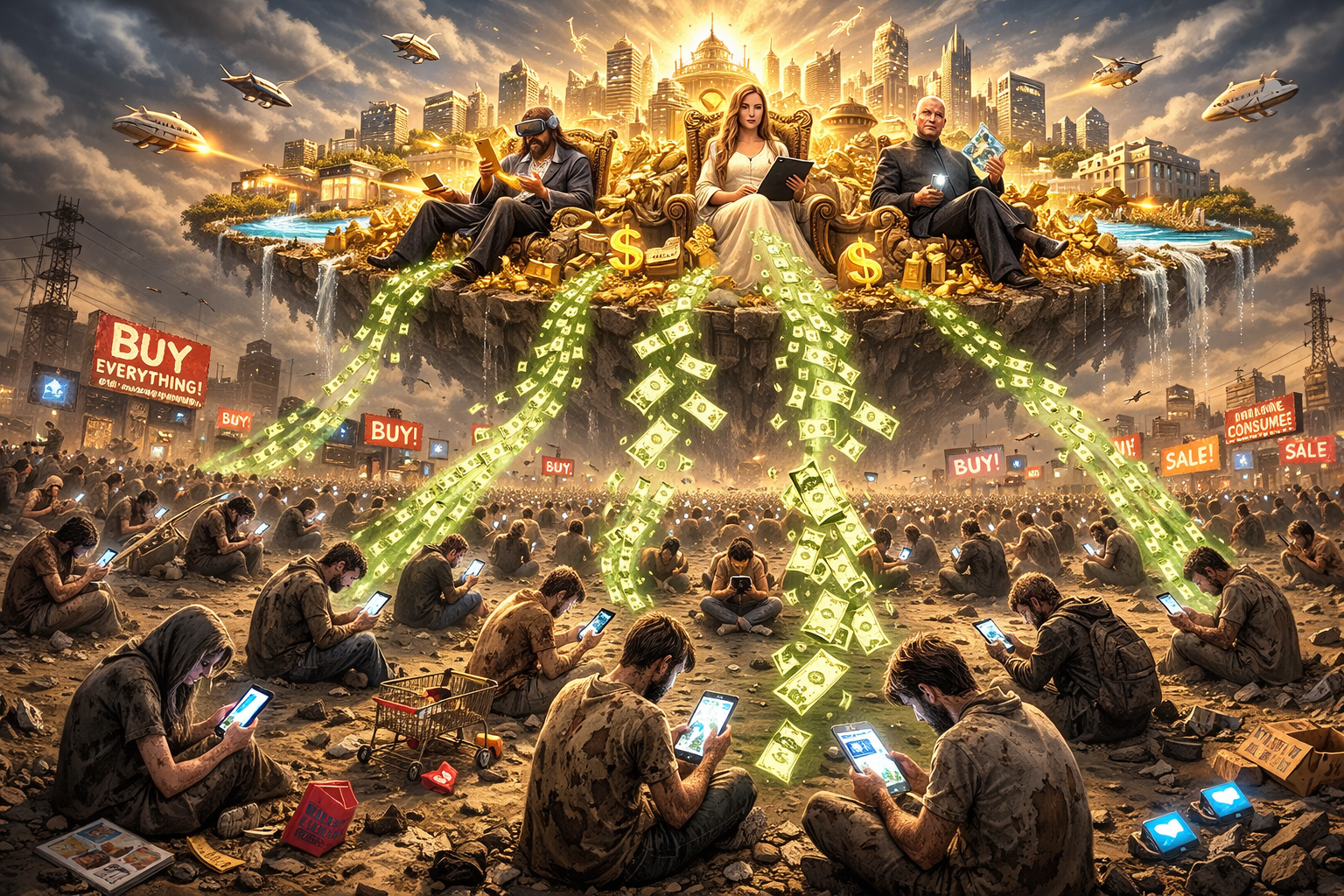
[pic is AI trash for sure.. its only there to blame me later]
My personal view? That’s none of my business. I do not even know what political direction colleges have…. I simply do not care about it.
I used to be a very political person in the past. Today, I see it differently.
Politics does not really exist. What exists are companies and interests focused on making money — taking from people who are already poor.
The concentration of wealth is the real problem.
We here at the bottom feed by left coffee grounds, are tricked into chasing “wings,” religion, or native identities. Meanwhile, the real structural problems stay untouched.
We will see massive unemployment all over the planet very soon. Terminator is real, but different.
We have bigger problems.
By saying that, I am very sick of politics.
It is a waste of time to discuss. This is not a world of free nations. It is a world of big businesses. This world does not belong to the people, the political systems, or states.
We are under mass hypnosis and enslaved to such a degree. We no longer have space in our brains. We can’t realize how much we are being tricked by everything that surrounds us in the “modern” world.
My kingdom is small and impassably wide. I am time. I am the time that creeps and hurries, inflicts wounds and heals wounds. Have neither heart nor eyesight. I don’t know the good and the bad. I don’t separate the good and the bad. I don”t hate anyone, I don’t feel sorry for anyone. I am time.
There is only one thing – this is entrusted to you: You are too loud! I don’t hear the seconds, I don’t hear the step of the hours. I hear you praying, cursing, screaming, I hear shots in between; I hear only you, only you alone … Be careful, you humans, what I want to say: Be quiet at last!
You are a speck of dust in the garment of time, – Leave your strife! Small as a dot is the planet, Which rotates with you in space. Microbes don’t like to scream. And if you don’t want to be wise, You can at least be quiet. Be silent before the ticking of infinity! Listen to the time!